Morning Light and Your Energy: Why the First Hour Matters
Getting daylight early may be one of the simplest ways to feel more alert by day and sleep better by night. Here's how to make it a habit.
One of the most powerful energy tools available to you is free, requires no app, and is waiting just outside your door. Morning light, caught early, can ripple through your whole day — and into your night.
Light’s role in your body clock
Your body runs on an internal clock that governs when you feel alert and when you feel sleepy. That clock isn’t perfectly set to 24 hours on its own; it needs daily cues to stay aligned with the world around you. The single most important cue is light.
When bright light reaches your eyes in the morning, it sends a clear signal to your brain that the day has begun. Research suggests this helps anchor your circadian rhythm, supporting alertness during the day and helping set the timing of sleepiness later that evening. In other words, the light you get at breakfast may help you wind down at bedtime.
The effect appears to be strongest with genuinely bright light — the kind you get outdoors. Even on an overcast day, outdoor light is typically far brighter than ordinary indoor lighting, which is part of why “just step outside” is such a recurring piece of advice.
The mechanism matters less than the takeaway: catching light early is a low-cost way to support steadier energy and better sleep, and the first hour or so after waking seems to be prime time.
Practical ways to get morning light
You don’t need a sunrise hike or a major schedule overhaul. The aim is simply to expose yourself to bright outdoor light not long after you wake, for a stretch of time rather than a passing glance.
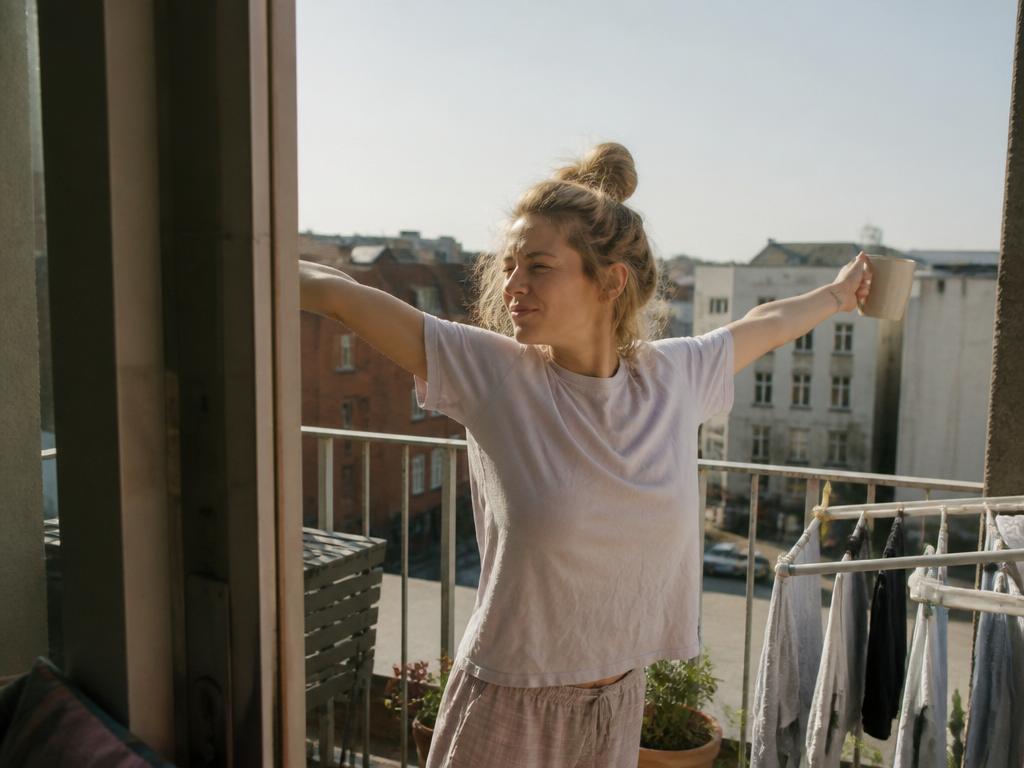
- Take your coffee outside. A few minutes on a porch, balcony, or front step counts.
- Walk early. A short morning walk pairs light exposure with movement — a double win for energy.
- Commute with light in mind. Walk or bike part of the way, or sit by a window on transit.
- Open the curtains immediately. It’s not as strong as being outdoors, but bright indoor light beats a dim room.
- Make it social. Walking a dog, seeing a friend, or moving the kids’ routine outside makes the habit stick.
A loose target many people find workable:
| Conditions | Rough time outdoors |
|---|---|
| Bright, sunny morning | A short spell is plenty |
| Overcast or cloudy | A bit longer helps |
| Before sunrise (dark) | Wait for daylight, or use bright indoor light meanwhile |
The point is consistency, not perfection. A daily few minutes beats an occasional long session.
Indoor and gray-day workarounds
Not everyone can get outside first thing. Early shifts, dark winters, weather, mobility, and packed mornings are all real. The good news is there are reasonable workarounds.
On gray or rainy days, remember that outdoor light is usually still much brighter than indoor light, so even a brief step outside under cloud cover may help. If going out isn’t possible, position yourself near the brightest window you have while you eat or get ready, and open every blind in the room.
During dark winter mornings — when the sun simply isn’t up when you are — some people use bright artificial light to bridge the gap until daylight arrives. If you go this route, it’s a reasonable topic to raise with a clinician, especially if you experience seasonal mood changes, so you can match the approach to your situation.
A few extra habits that complement morning light:
- Keep a consistent wake time, which gives your clock a steady anchor.
- Dim the lights in the evening so the contrast between bright days and dark nights stays strong.
- Don’t obsess. A missed morning won’t undo your progress; just resume the next day.
The bottom line
Morning light is one of the rare wellness levers that’s genuinely simple, free, and well-supported as a way to steady your energy and your sleep. Step outside early when you can, sit by a window when you can’t, and keep your wake time consistent. Give the first hour of your day a little light, and your body clock tends to return the favor — with sharper days and easier nights.