Is Walking After Meals Good for Blood Sugar?
What a 10-minute post-meal walk actually does to your glucose response, when the timing matters most, and who stands to gain the most from it.
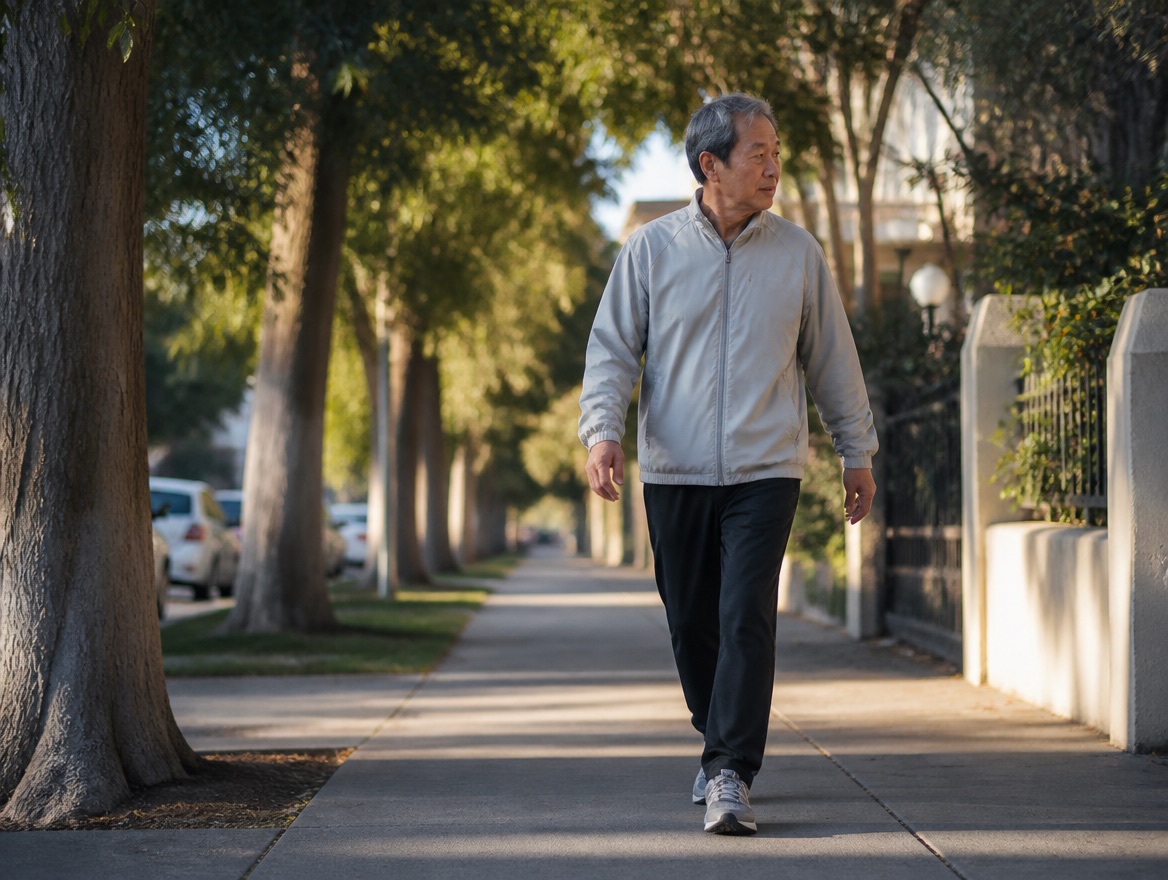
It is one of the smallest interventions I know of that seems to earn its keep: finishing a meal and, instead of sinking into the couch, going for a short, easy walk. Ten minutes. No gear, no gym, no app buzzing at you. And yet the research on post-meal walking keeps pointing in the same direction — a modest, well-timed walk tends to blunt the rise in blood sugar that follows eating.
Let me walk through what actually happens, when it matters, and who has the most to gain — because the honest version is more useful than the headline version.
What a post-meal walk does to glucose
When you eat, especially a meal with carbohydrates, your blood sugar climbs. That climb — the post-prandial spike — is normal. In a healthy system, insulin ushers the glucose out of the bloodstream and into cells, and the level settles back down within a couple of hours.
Walking speeds up part of that clearance in a way that doesn’t lean entirely on insulin. Contracting muscle pulls glucose out of the blood to fuel the work, using a pathway that operates alongside the insulin one. So a short walk gives your circulating glucose somewhere useful to go, right when it is peaking. The practical result in most studies: a lower, gentler curve rather than a sharp spike and the sluggish dip that can follow.
It is worth being clear about the size of the effect. This is a smoothing, not a reset. A walk is not a substitute for the broader levers — what you eat, how you sleep, your overall activity, and any medication your clinician has prescribed. It is a small, repeatable nudge that happens to be easy to actually do.
Timing: sooner beats later
The window seems to matter. Glucose tends to peak somewhere around 30 to 60 minutes after you start eating, so the most-studied approach is to start moving within roughly 30 minutes of finishing — catching the rise as it happens rather than after it has already crested.
That is also the reassuring part: you do not need a long walk. Much of the research uses short bouts — on the order of 10 to 15 minutes at an easy, conversational pace. A stroll around the block after dinner counts. You are not trying to burn the meal off; you are just keeping the muscle gently active while glucose is high.
| Question | The short answer |
|---|---|
| How long? | ~10–15 minutes is enough in most studies; longer is fine, not required. |
| How hard? | Easy, conversational pace. A brisk stroll, not a workout. |
| When? | Start within ~30 minutes of finishing the meal, while glucose is rising. |
| Which meal? | Any meal helps; the biggest, most carb-heavy meal of your day is the highest-value target. |
| How often? | Whenever it fits. Even after one meal a day is a reasonable place to start. |
Who benefits most
Everyone’s glucose rises after eating, but the people who see the clearest benefit tend to be those whose systems are already working harder to manage it: people with insulin resistance, prediabetes, or type 2 diabetes. When the insulin response is blunted, the insulin-independent glucose uptake from walking muscle does more relative work — so the smoothing effect can be more noticeable.
Meal size matters too. A short walk after a large, carbohydrate-forward meal — the pasta dinner, the big lunch — has more spike to blunt than a walk after a small, balanced plate. If you are going to pick one meal a day to build the habit around, the biggest one is the pragmatic choice.
None of this means a post-meal walk is a treatment. If you have been diagnosed with a metabolic condition, think of walking as a supportive habit that sits alongside the plan you and your clinician have built — not a replacement for any part of it.
How it compares to walking at other times
A common question: is a post-meal walk better than the same walk in the morning or whenever it is convenient? For blood-sugar smoothing specifically, timing it after eating appears to have an edge, because it lines the muscle activity up with the glucose peak. Walking on an empty stomach is genuinely good for you in plenty of other ways — mood, cardiovascular health, daily step count — it just isn’t aimed at the post-meal spike.
The most useful framing I have found: the total amount you move across the day is the big lever, and placing some of that movement right after your largest meal is a low-cost bonus on top. You are moving steps you would have taken anyway to a moment when they do a little extra work.
Realistic caveats
A few honest limits worth naming:
- Continuous glucose data is noisy and individual. If you wear a monitor, expect variation. One walk that doesn’t flatten a spike doesn’t mean it isn’t helping over weeks.
- If you take insulin or other glucose-lowering medication, add caution. Exercise can lower blood sugar, and stacking a walk on top of medication could push you lower than intended. Talk to your clinician about timing and about recognizing hypoglycemia before you build the habit.
- Comfort first. A gentle walk is fine for most people, but if you have reflux, a specific medical condition, or a meal sits heavily, adjust the pace or wait a few minutes. Nobody should feel unwell to chase a number.
- It compounds slowly. The value is in doing it most days, not perfectly. A missed walk is a missed walk, not a broken streak.
This piece is general wellness education, not medical advice. If you have diabetes, take glucose-lowering medication, are pregnant, or have any condition that changes the picture, talk with your clinician before making it a routine.
The bottom line
A short, easy walk within about half an hour of finishing a meal gives rising glucose a useful place to go, and tends to blunt the post-meal spike — most noticeably for people with insulin resistance or type 2 diabetes, and after the biggest, most carb-heavy meal of the day. It is small on purpose. Ten quiet minutes after dinner, done most days, is the kind of habit that is easy to keep and worth keeping.