Strength Training for Beginners Who Aren't Gym People
You don't need a gym membership or fancy equipment to get stronger. A low-intimidation on-ramp to building strength anywhere, starting from zero.
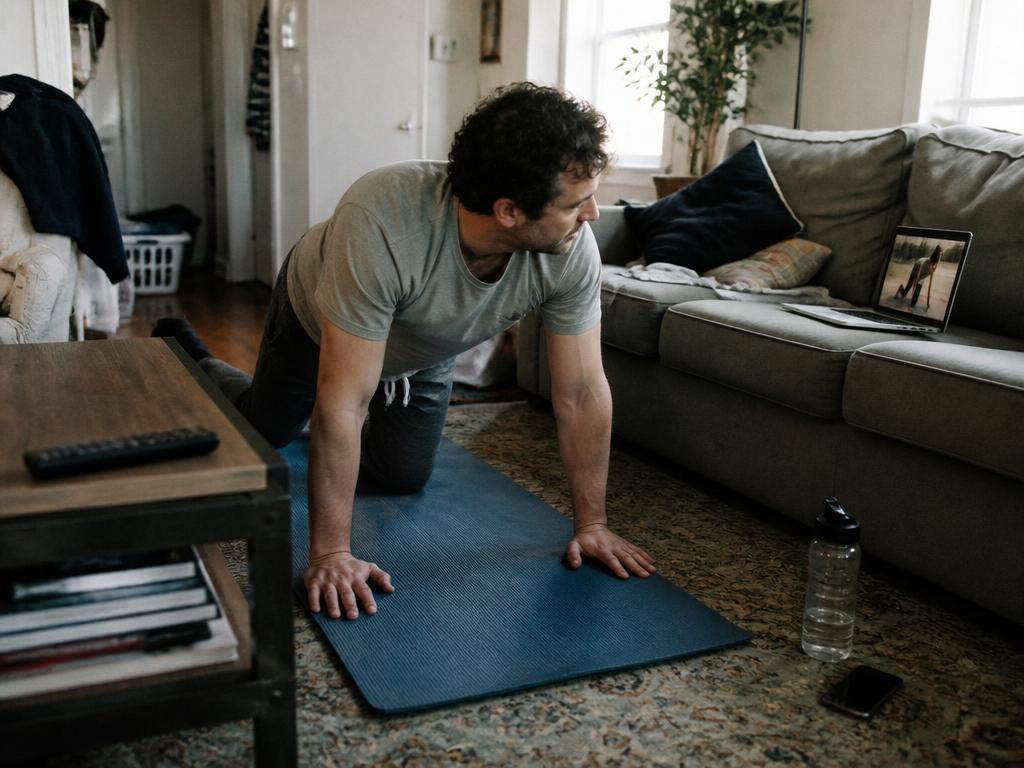
If the word “gym” makes you want to close this tab, stay with me. Building strength doesn’t require a membership, intimidating machines, or knowing what anyone else is doing. It can start in your living room, today, with nothing but your own body.
The basic movement patterns
Strength training sounds technical, but at its core it comes down to a handful of fundamental movement patterns — the same motions your body uses in everyday life. Master approachable versions of these, and you’ve covered most of what matters.
The key patterns, with beginner-friendly examples:
- Squat — sitting down and standing up. A simple chair-assisted sit-to-stand is a perfect starting point.
- Hinge — bending at the hips, like picking something up safely. Gentle hip-hinge movements build the back of your body.
- Push — pressing away from you. Wall push-ups are an excellent, low-intimidation entry.
- Pull — drawing something toward you. Rows using a sturdy object or band work this pattern.
- Carry / core — holding steady and bracing. Carrying groceries or holding a plank-style position counts.
Notice these aren’t exotic gym lifts — they’re the movements daily life already asks of you. Training them just makes those everyday motions easier and keeps you capable over time. You don’t need to learn dozens of exercises; a few solid movements covering these patterns is plenty when you’re starting out.
The golden rule for beginners: start where you are. Easier variations aren’t lesser — they’re the smart on-ramp, and they let you build good form before adding difficulty.
Progressing without equipment
A common myth is that you need weights to get stronger. In reality, your own bodyweight provides plenty of resistance to begin with, and there are many ways to make movements progressively harder without buying a thing.
The core principle is gradual progression: as a movement gets easier, you increase the challenge a little so your muscles keep adapting. Equipment is just one way to do that — and far from the only one.
Ways to make bodyweight movements harder over time:
| Make it easier | Make it harder |
|---|---|
| Push-ups against a wall | Push-ups on the floor |
| Squats to a chair | Squats without support |
| Shorter holds | Longer holds |
| Fewer repetitions | More repetitions |
| Faster, easier reps | Slower, more controlled reps |
Other no-cost progression levers include doing more repetitions, adding another round, slowing down the movement for more control, or shortening your rest between efforts. Household items — a backpack with books, water jugs, a sturdy chair — can add resistance once bodyweight alone feels too easy. Resistance bands are an inexpensive option too, but they’re optional, not required.
The point is that “no equipment” is no barrier. Progression is about gradually asking a little more of your body, and there are endless ways to do that at home.
Recovery and consistency
Here’s something beginners often get backwards: you don’t get stronger during the workout. You get stronger afterward, as your body recovers and adapts. That makes rest a genuine part of the program, not a sign of slacking.
A few recovery essentials:
- Leave rest between sessions. Training the same muscles every single day doesn’t give them time to rebuild. Spacing strength sessions out is part of how progress happens.
- Expect some soreness early on. Mild muscle soreness in the days after starting is normal, especially at first, and it typically eases as your body adapts. Sharp or joint pain, though, is a signal to back off and reassess.
- Support recovery with the basics. Sleep, adequate protein, and overall good nutrition all help your muscles rebuild.
But the real secret ingredient is consistency. A modest routine you actually keep doing beats an ambitious one you abandon after a week. Strength is built slowly, over months and years, through repetition — so the goal is to make your habit sustainable, not heroic.
Tips to stay consistent:
- Start small enough that it feels easy to show up.
- Anchor sessions to existing routines so they become automatic.
- Track your progress to stay motivated by how far you’ve come.
- Forgive missed days and simply resume — perfection isn’t the goal.
If you’re new to exercise, older, or have any health conditions, it’s wise to check with a clinician before starting, so your approach fits your situation.
The bottom line
You don’t have to be a “gym person” to get stronger — you just need a few basic movement patterns, a willingness to start with the easy versions, and a little consistency. Bodyweight gives you all the resistance you need to begin, household items can take it further, and recovery is where the gains actually happen. Start small, progress gradually, keep showing up, and let strength build quietly over time. Your living room is a perfectly good place to begin.