
How Much Protein After 40 to Maintain Muscle
After 40, your muscles get a little harder to talk to. Here's how much protein actually moves the needle, and how to hit it without overhauling dinner.
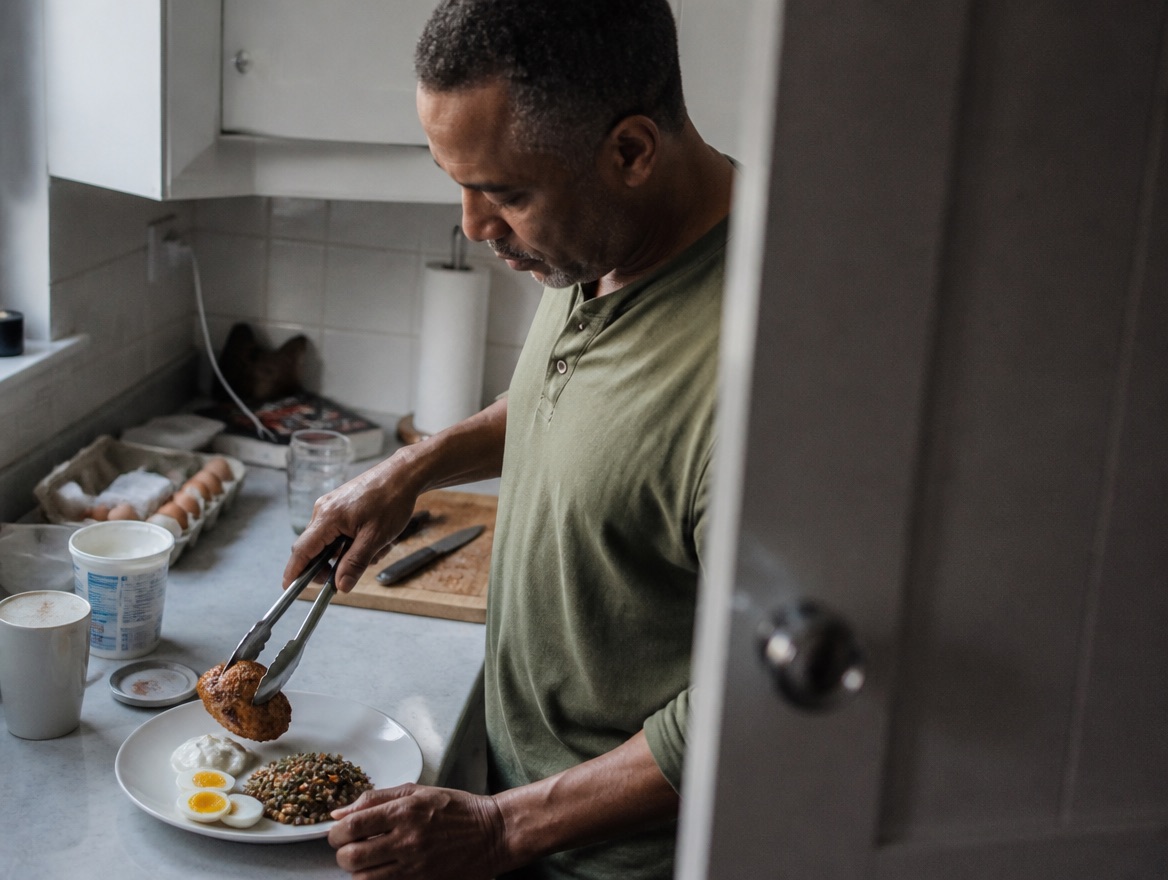
My friend Lena turned 44 last spring, kept her training the same, kept her plate roughly the same, and watched her arms quietly go soft anyway. Her body is just driving a harder bargain about protein than it used to, and like a lot of us in our 40s, she hadn’t noticed.
This is the part of healthy aging that gets undersold. The headline isn’t “eat more steak.” The same meal that built muscle at 28 doesn’t push the same buttons at 48, and a few small shifts at breakfast and lunch tend to do more than any heroic dinner.
Why per-meal targets climb with age
In your 20s and 30s, a modest hit of protein at a meal is generally enough to flip what nutrition researchers call the muscle-building switch. After about 40, that switch can get a little stickier. Research on what’s often nicknamed ‘anabolic resistance’ suggests older muscle may need a bigger per-meal dose of protein, and especially of the amino acid leucine, to mount a similar response to what younger muscle gets from less.
That means the daily total matters, but the shape of the day matters more than it used to. Two coffees and a snack until 2pm, then a giant dinner, may technically add up to a reasonable number on paper and still leave your muscles under-fed for most of the day.
The numbers most commonly discussed in the sports-nutrition conversation tend to land in a familiar range:
- A daily target of roughly 1.2 to 1.6 grams of protein per kilogram of body weight is a range many sports-nutrition sources suggest for active adults over 40, with people who strength train and want to hold muscle often pointed toward the higher end.
- A per-meal target in the neighborhood of about 30 grams of high-quality protein, three or four times a day, is often discussed as a useful frame for giving each meal a better shot at signaling muscle.
Treat those as a reasonable starting frame, not a prescription. Before you anchor your day around any specific gram target, it’s worth talking to a clinician or registered dietitian who can look at the whole picture — and that’s doubly true if you have kidney disease, are on dialysis, are managing diabetes or another chronic condition, or are pregnant. Protein needs in those situations are individual, and the numbers above may not apply to you.
What ~30 grams actually looks like on a plate
The thing that trips most people up is the gap between ‘I eat protein’ and ‘I hit 30 grams.’ A single egg is about 6 grams. A spoon of peanut butter is about 4. You can feel like you had a protein-forward breakfast and still be down at 12.
Here is the rough mental map I use when I’m advising friends who don’t want to weigh anything:
- 3 large eggs + a cup of cottage cheese in a savory scramble — about 35 grams.
- One cup of plain Greek yogurt + a scoop of whey or pea protein stirred in — about 35 to 40 grams, fast.
- A palm-sized chicken thigh (~140g cooked) over a grain bowl — about 30 grams.
- A 5-ounce can of tuna or salmon smashed onto sourdough with olive oil — about 30 grams.
- A cup of cooked lentils plus a couple tablespoons of hemp seeds and some feta — about 25 to 30 grams, fully plant-leaning.
- A cup of edamame + a block of tofu stir-fried — about 30 grams without leaving the plant aisle.
Notice what isn’t on that list: a granola bar, a green juice, a slice of avocado toast. Those are fine foods. They’re just not protein meals, and pretending they are is how breakfast quietly becomes the weak link.
Building a day that adds up
The simplest pattern I’ve seen work for women and men in their 40s and 50s is what I think of as ‘three real meals plus a protein-aware snack.’ You don’t need to count anything once the shape is in place — you’re really just protecting breakfast.
Here’s how a typical day might land for a roughly 70 kg / 155 lb adult aiming somewhere around 105 to 110 grams a day:
| Meal | Example | Protein |
|---|---|---|
| Breakfast | Greek yogurt bowl with whey, berries, walnuts | ~35 g |
| Lunch | Chicken thigh + grain bowl with beans and feta | ~35 g |
| Snack | Cottage cheese with fruit, or a boiled egg + jerky | ~15 g |
| Dinner | Salmon, lentils, roasted vegetables | ~30 g |
That’s roughly 115 grams across the day without any of it feeling like a bodybuilder’s meal plan. The leverage point is breakfast, because that’s where most adults under-eat protein by the widest margin. Front-loading the day also tends to take pressure off dinner, which is when people often overshoot calories trying to make up for a thin morning.
A couple of practical notes that save people the most trouble:
- Anchor the protein first. Decide what your protein is, then build the carbs and vegetables around it. The reverse order is how 12-gram meals happen.
- Treat dairy and legumes as serious players, not garnishes. Cottage cheese, Greek yogurt, lentils, tofu and edamame do a lot of quiet work.
- Lift something. Protein is the raw material; resistance training is the signal that tells your body to actually use it. Without the signal, the raw material gets burned for fuel.
- Hydrate around your meals. Appetite and thirst get easier to confuse after 40, and a glass of water with a protein-forward breakfast often helps it stick.
What this isn’t
This isn’t a case for protein powder with everything, and it isn’t a license to ignore vegetables, fiber, or the rest of the plate. Most adults over 40 don’t need to overhaul their diet; they need to nudge the breakfast and lunch numbers up by 10 to 20 grams each and keep their training honest.
It also isn’t a guarantee. Hormones, sleep, stress, illness and medication all influence how your body holds onto muscle, and protein is one lever among several. Many adults find their lean mass tends to stabilize once they protect per-meal protein and keep lifting; some need more support than food alone can give. If your strength is dropping despite doing the work, that’s worth raising with a clinician.
The bottom line
After 40, the daily protein number matters less than the shape of your day. Aim for a real protein anchor at each meal, give breakfast the same respect you give dinner, and pair the eating with regular resistance training. The goal isn’t to chase a perfect grams-per-kilogram figure forever. It’s to give your muscles enough material, often enough, that they have a reason to stay.